From "Firefighting" to Flow:
How Kaizen Powers
World-Class SRE
Written by:

Principal Consultant
Sapience Consulting
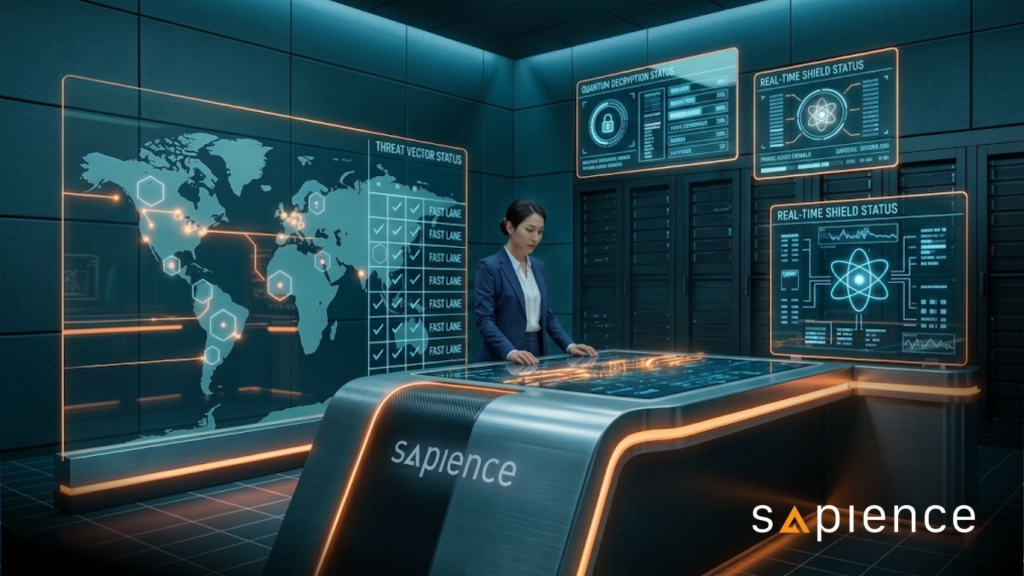
Kaizen is a powerful timeless philosophy that holds surprisingly potent lessons for modern approaches like SRE. It is living proof that fundamental principles of efficiency and quality, born in a factory environment, are profoundly relevant to the complex, distributed systems of today. This article will explore the synergy between SRE and Kaizen, showing how applying Kaizen’s core principles can transform your operations from reactive firefighting to a smooth, continuously improving flow.
SREs keep the Digital Lights Brightly On!
SRE is an engineering discipline focused on making software systems reliable. It is what happens when you take an operations team and infuse it with a software engineering mindset.
SREs are responsible for the availability, latency, performance, and efficiency of their services. Their goal isn’t just to keep things from breaking, but to build systems that are inherently resilient, scalable, and manageable. They achieve this by applying software engineering principles to operations tasks, automating repetitive work (toil), and relentlessly pursuing the elimination of manual effort. It’s a delicate balance between enabling rapid feature development and ensuring a great user experience through high reliability.
Kaizen’s Art of Small, Constant Improvements
Originating in post-WWII Japan, Kaizen is a timeless philosophy meaning “change for the better” or “continuous improvement.” It’s not about radical, disruptive overhauls, but rather about making small, incremental, and continuous positive changes in processes, products, or services. The core belief of Kaizen is that even tiny improvements, when consistently applied across the enterprise and aggregated over time, lead to significant and sustainable gains. It’s a culture where improvement is a daily habit, not a special project. We will explore five core Kaizen principles and how it can relate to SRE:
For an SRE, the customer is anyone who interacts with the service. This includes external end-users and internal development teams. This principle is baked into the foundation of SRE: Service Level Objectives (SLOs). SLOs are specific, measurable goals for availability, latency, or throughput, and they are defined by what the customer actually needs to have a good experience. Kaizen demands that every automation script, every deployment process, and every monitoring threshold must ultimately serve to meet (or exceed) these customer-defined SLOs. If a process doesn’t improve a customer experience or system reliability, it’s considered waste.
In a factory, Gemba is the floor where the product is made. For SRE, the Gemba is the running system in production—the dashboard, the logs, the command line during an outage. You can’t solve an outage from a theoretical architecture diagram. The “Go to Gemba” principle requires SREs to get real-time visibility into the production environment. This means ensuring robust logging, metrics, and tracing (Observability) to truly see what the system is doing. During post-mortems, the team must examine the actual events (the Gemba data) to understand the failure, rather than relying on assumptions or guesswork.
In the Toyota production system, people empowerment is symbolised by the Andon Cord, a rope anyone could pull to immediately stop the entire production line if they spotted a defect or safety issue. This was an act of profound trust: empowering any worker to halt operations to ensure quality. This principle drives the SRE philosophy of empowerment. The SRE Andon Cord is the power every engineer has to halt a risky deployment, escalate an incipient issue, or declare an incident without fear of retribution. This is institutionalised trust.
Continuous improvement requires open, honest data to track progress and identify where the next efforts should be focused. SRE lives and dies by transparency. All performance metrics, SLO reports, and error budgets must be publicly visible to all stakeholders (developers, management, and product owners). By transparently tracking key metrics like Mean Time To Restore (MTTR) and the balance between toil vs. strategic work time, the SRE team ensures that every improvement decision is data-driven, fostering accountability and trust across the entire engineering organisation.
By embracing the timeless philosophy of Kaizen, SRE teams can move beyond reactive firefighting and build truly world-class, continually improving systems that deliver exceptional reliability for their users. So, what small improvement will you make today?
Build a Resilient SRE Practice with Sapience
Mastering Site Reliability Engineering requires practical implementation skills and cultural alignment. At Sapience Consulting, our industry practitioners help enterprise teams upskill, adopt modern observability frameworks, and transform IT operations.
Check out our IBF and SSG funded courses! There is no better time to upskill than now!
IBF Funding
IBF Funding