Climbing the Ladder:
Using the Cyber Trust Mark as a Roadmap, Not Just a Badge
Written by:

Principal Consultant
Sapience Consulting
Every organisation eventually gets the question: “Can you show us that you are secure?” It may come from a large customer’s procurement team, from a regulator, from a partner or from the board itself. A verbal assurance no longer suffices, and a thick policy folder rarely persuades anyone.
What is the Cyber Trust Mark?
Singapore’s cybersecurity certification for organisations, developed by the Cyber Security Agency of Singapore (CSA). It helps organisations show, through independent assessment, that they have taken proportionate steps to protect themselves [1].
What makes CTM interesting for senior managers is its structure. It is not a single pass-or-fail hurdle. It comes in five tiers, so an organisation can start at a level that fits its size and risk, and climb as the business grows and customers demand more. This article explains how the tiers work, how to choose where to begin, and how to avoid the common mistake of treating certification as a badge to collect rather than a way to improve.
Five tiers, one direction of travel
CSA describes five tiers: Supporter, Practitioner, Promoter, Performer and Advocate. The number of cybersecurity preparedness domains assessed grows from 10 at the entry tier, Supporter, to 22 at the highest, Advocate, also known as Level 5 [1]. The scheme is risk-based, meaning the depth of what you need to demonstrate reflects your actual risk profile, and it can serve as a pathway towards ISO/IEC 27001 certification [1].
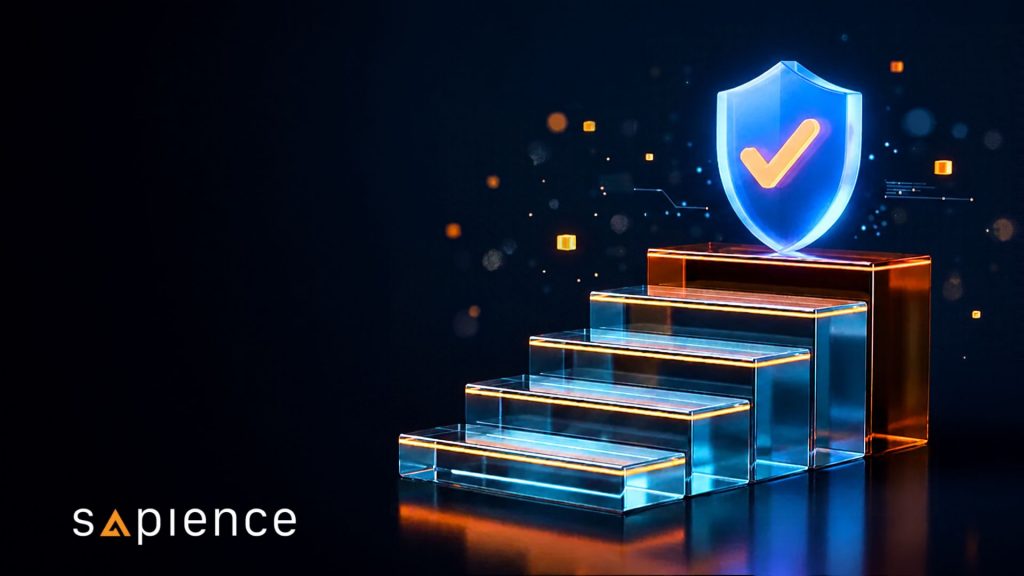
Think of it as a staircase. A small business that handles little sensitive data does not need to start at the top. A firm handling critical systems or large volumes of sensitive information will aim higher.
Why the higher tiers are becoming more relevant
CTM is also moving from “nice to have” to “expected” in some segments. CSA’s updated Code of Practice for Critical Information Infrastructure requires CII owners to attain Cyber Trust Mark Level 5 [2]. CSA has also set deadlines for CII auditors and licensed cybersecurity service providers to obtain CTM certification by the end of 2026 [3]. Suppliers to these organisations should expect questions to follow the contract chain.
For suppliers and service providers, certification can therefore become a commercial asset as well as a risk control.
Choosing your starting tier
A practical way to decide:
1. Start from your customers
What do the largest or most regulated customers ask for today, and what are they likely to ask in two years?
2. Start from your data and systems
The more sensitive the information and the more critical the service, the higher the tier you should consider.
3. Check your foundations
Do you have asset lists, access control, backups, incident procedures and trained staff? If not, begin with the basics and aim for an achievable tier.
4. Plan the climb
Pick a target tier for this year and a candidate for next, and align your budget to it.
Avoiding the badge trap
The most common failure is treating certification as an event. A team assembles evidence in a frantic six weeks, passes the assessment, and quietly stops doing many of the activities afterwards. The following year the effort starts again from scratch, and the badge hides a gap between what is certified and what is practised.
A sounder approach is to design the controls so that evidence is created by normal work: tickets raised and closed, access reviews signed off, training records captured automatically, management review minuted. If the daily routine produces the evidence, the assessment becomes a check rather than a campaign.
- Six frantic weeks of gathering evidence
- Activities quietly stop after the assessment
- Next year starts again from scratch
- Evidence comes from normal work
- Tickets, access reviews and training records build up as you go
- The assessment is a check, not a campaign
Document what you do, do what you document
This is the principle behind every engagement we take on. Write down what you actually do, keep it short, and then do what you wrote. If a procedure is too demanding for the team to follow, simplify the procedure rather than pretending to follow it. Sapience Consulting was certified to CTM Level 5 by ISOCert in May 2026, and we found that the simpler and more genuine our processes, the easier the assessment became.
What to take away
The Cyber Trust Mark is best seen as a roadmap for building trust over time. Four ideas to remember:
- It has five tiers, from 10 to 22 domains, so you can start where it makes sense.
- It is risk-based and can lead towards ISO/IEC 27001.
- It is increasingly relevant for CII owners, their auditors and their service providers.
- Its value lies in changing how you operate, not in the badge.
Sapience Consulting is a Cyber Trust Mark Level 5 certified firm, so we advise from experience as well as from the standard. We can run a readiness assessment, help you choose a tier, build lean and sustainable controls, and train your people. Our guidance is designed to keep working long after the assessor leaves.
Wondering which Cyber Trust Mark tier is right for you?
Contact Sapience Consulting for a CTM readiness assessment and a practical roadmap for your organisation.
Book a CTM readiness assessment →Sources
- Cyber Security Agency of Singapore, Cyber Trust mark.
- Cyber Security Agency of Singapore, press release of 22 July 2026 on the updated Cybersecurity Code of Practice for CII.
- Cyber Security Agency of Singapore, “CSA to Raise Cybersecurity Standards for Critical Information Infrastructure Owners”, 2 March 2026.
As a trusted leader in professional development, Sapience empowers you to invest in your future.
Don’t wait – Explore our available funding and leverage our expertise to upskill without financial strain.