Singapore’s Health Information Act:
Strengthening Healthcare Data Sharing While Safeguarding Trust
Written by:

Principal Consultant
Sapience Consulting

Singapore has taken a significant step forward in healthcare transformation with the recent passage of its Health Information Act (HIA). The new law mandates structured, secure sharing of patient health information across the healthcare ecosystem, aiming to improve continuity of care while maintaining strong governance over sensitive health data.
This development builds on Singapore’s broader data protection framework, particularly the Personal Data Protection Commission’s Personal Data Protection Act (PDPA), and reflects the country’s ambition to deliver integrated, data-driven healthcare without compromising privacy and trust.
This article explores why the Health Information Act is needed, its key provisions, the organisations affected, associated liabilities, how it aligns with the PDPA, and how consulting firms like Sapience Consulting can support compliance.
Why the Health Information Act Was Needed
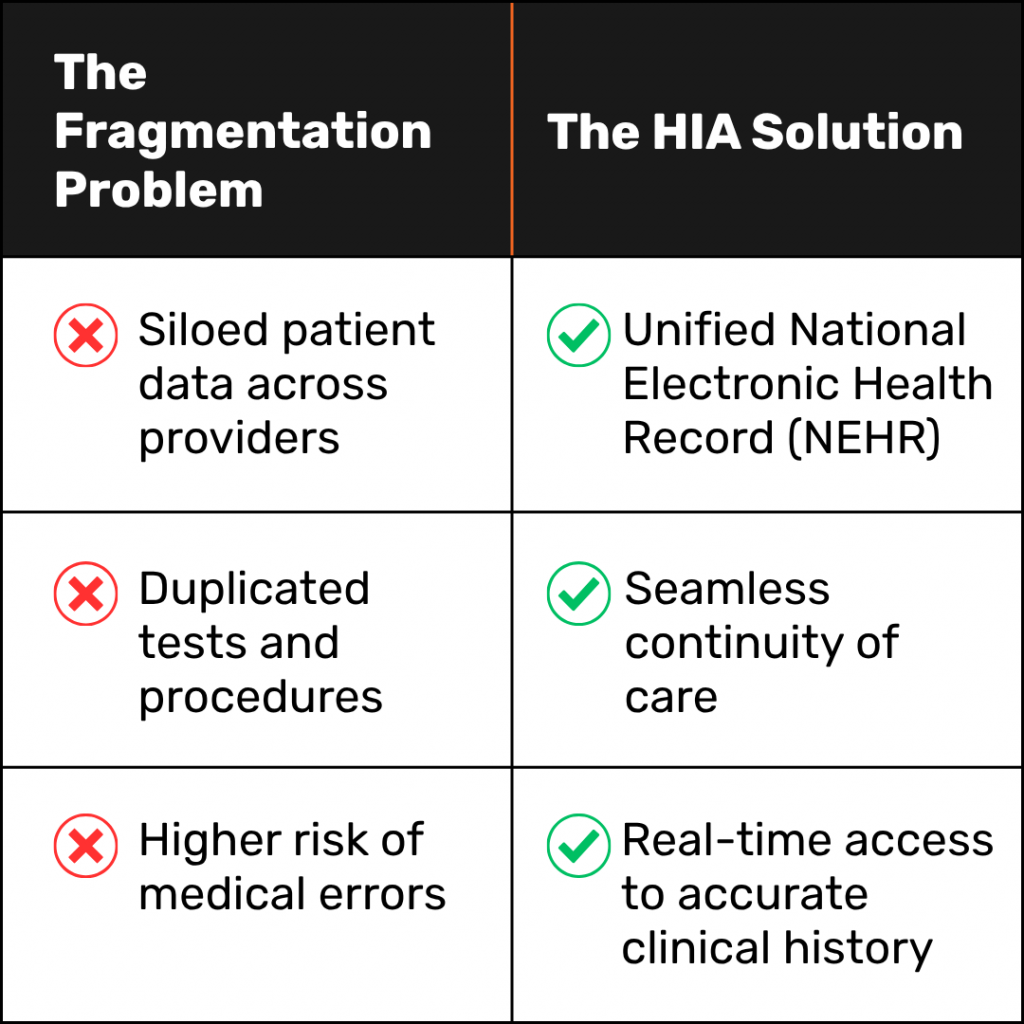
Healthcare in Singapore has long been characterised by high standards of care, but data fragmentation has remained a challenge. Patient information has traditionally been stored across multiple providers—public hospitals, private clinics, specialist centers, and allied health services—often in siloed systems.
This fragmentation can lead to:
- Incomplete clinical information at the point of care
- Duplicated tests and procedures
- Increased risk of medical errors
- Delays in diagnosis and treatment
The Health Information Act addresses these issues by creating a legal framework for mandatory health data sharing, enabling healthcare providers to access accurate and up-to-date patient information when it is needed most. At the same time, it introduces clear guardrails to ensure that sensitive health data is handled responsibly.
Key Objectives of the Health Information Act
The Act is designed to balance care delivery efficiency with data protection and governance. Its key objectives include:
-
Improved Continuity of Care
Ensuring that healthcare professionals have timely access to relevant patient information across care settings. -
Patient Safety and Outcomes
Reducing clinical risk arising from incomplete or outdated medical records. -
System-Wide Efficiency
Minimising duplication of tests and administrative overhead. -
Stronger Data Governance
Establishing clear rules for collection, use, sharing, and protection of health information.
Key Provisions of the Health Information Act
While implementation details will continue to evolve, several core elements define the Act:
Mandatory Health Data Contribution
Healthcare providers are required to contribute specified patient health information to a national health information platform designated by the Ministry of Health (MOH).Permitted Use and Access Controls
Access to shared health data is restricted to authorised healthcare professionals and permitted purposes, such as clinical care, care coordination, and approved public health uses.Data Security and Safeguards
Organisations must implement appropriate technical and organisational measures to protect health information against unauthorised access, misuse, or breaches.Oversight and Enforcement
Regulators are empowered to conduct audits, issue directives, and impose penalties for non-compliance.

Organisations Affected by the Act
The Health Information Act has a broad scope and affects multiple segments of the healthcare ecosystem, including:
- Public and private hospitals
- General practitioners and specialist clinics
- Community care providers and nursing homes
- Allied health providers (e.g., physiotherapy, diagnostics)
- Healthcare IT vendors and managed service providers that handle patient data
Any organisation that collects, processes, or stores patient health information as part of healthcare delivery is likely to fall within scope.
⚠️ Critical Compliance Note: The HIA introduces statutory mandates. Non-compliance doesn’t just mean administrative friction; it carries potential regulatory sanctions, financial penalties, and mandatory corrective orders.
Impact and Liabilities for Organisations
The Act introduces both operational impact and legal accountability.
Operational
Impact
Organisations must:
- Integrate systems with national health information platforms
- Standardise data formats and data quality
- Train staff on lawful access and use of shared health information
Legal and Regulatory Liabilities
Non-compliance may expose organisations to:
- Regulatory sanctions and financial penalties
- Corrective orders and compliance audits
- Reputational damage arising from data misuse or breaches
Healthcare data is among the most sensitive categories of personal data, and regulators are expected to enforce the Act rigorously.
Alignment with the PDPA and Overlapping Areas
The Health Information Act does not replace the PDPA; instead, it operates alongside it.

Key Areas of Alignment
- Data Protection Principles
Both laws emphasise accountability, data security, and proper handling of personal data. - Breach Management
Obligations to protect data and manage breaches align closely with PDPA requirements. - Access Controls and Purpose Limitation
Data may only be accessed and used for authorised purposes.
Key Differences and Overlaps
- Consent
The PDPA generally relies on consent for data collection and use. The Health Information Act introduces statutory authorisation for certain data sharing activities, reducing reliance on individual consent while maintaining safeguards. - Sector-Specific Governance
The Health Information Act is healthcare-specific, whereas the PDPA applies across all sectors.
The “5-Step Readiness Checklist”
- [ ] Readiness Assessment:
Map your current data flows. - [ ] Governance Framework:
Define clear ownership and access controls. - [ ] Technical Safeguards:
Implement encryption and secure logging. - [ ] Staff Training:
Ensure frontline teams understand lawful access. - [ ] Audit Trail Preparation:
Establish documentation for regulatory oversight.
What Organisations Can Do to Ensure Compliance
To prepare for and comply with the Health Information Act, organisations should consider the following steps:
Conduct a Health Data Readiness Assessment
Identify what patient data is collected, where it resides, and how it flows across systems.Strengthen Data Governance Frameworks
Define clear ownership, access controls, and accountability for health information.Enhance Technical Safeguards
Implement encryption, logging, monitoring, and secure integration mechanisms.Align Policies and Training
Update privacy notices, internal policies, and staff training to reflect new obligations.Prepare for Regulatory Oversight
Establish audit trails and compliance documentation to demonstrate adherence.
How Sapience Consulting Can Support the Compliance Journey
Navigating the Health Information Act alongside PDPA obligations can be complex, particularly for organisations with legacy systems or diverse provider networks. Sapience Consulting supports healthcare organisations through:
- Regulatory impact assessments aligned to both the Health Information Act and PDPA
- Data governance and risk framework design tailored to healthcare environments
- Policy, process, and control implementation
- Readiness assessments and remediation roadmaps
- Ongoing advisory support to address regulatory updates and audits
By combining healthcare domain knowledge with governance, risk, and compliance expertise, Sapience Consulting helps organisations achieve compliance while enabling safe, effective data-driven care.
"The HIA is more than a data law—it is a trust framework. Organisations that view this as a strategic upgrade to their patient relationship, rather than just a compliance checkbox, will be the ones that thrive in Singapore’s new healthcare ecosystem."
Conclusion:
Singapore’s Health Information Act marks a transformative moment for healthcare delivery, enabling integrated, patient-centric care through secure data sharing. While the Act introduces new obligations and liabilities, it also creates an opportunity for organisations to strengthen governance, improve outcomes, and build trust.
When aligned effectively with the PDPA and supported by experienced consulting partners, compliance becomes not just a regulatory requirement—but a foundation for resilient, future-ready healthcare.
As a trusted leader in professional development, Sapience empowers you to invest in your future.
Don’t wait – Explore our available funding and leverage our expertise to upskill without financial strain.