
Beyond Compliance:

Navigating the Complex Path to ISO/IEC 27001 Certification

Written by:

Principal Consultant
Sapience Consulting

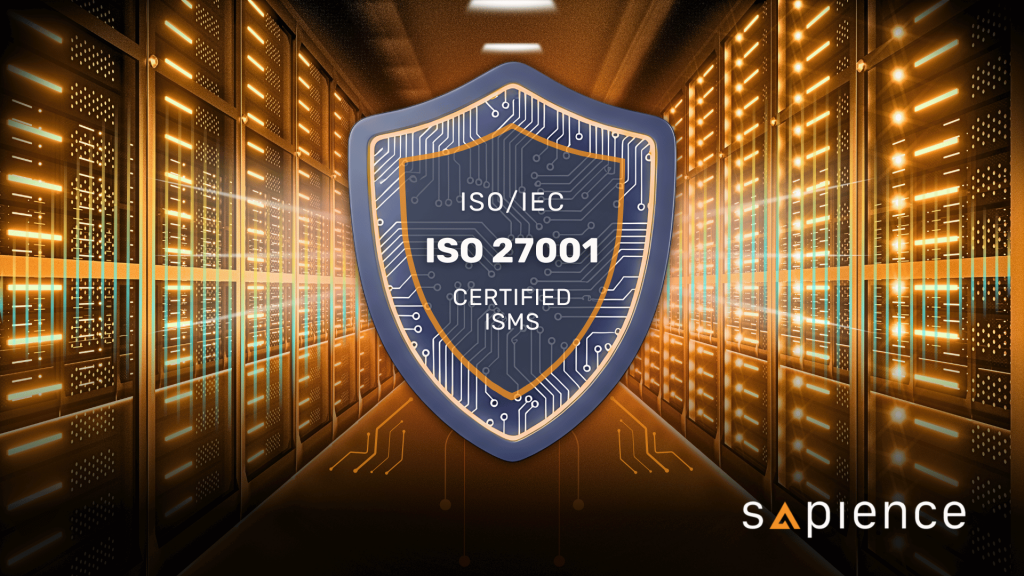
A digital illustration of a strong blue and orange shield, featuring the text 'ISO/IEC 27001 Certified ISMS' and a circuit board pattern, placed prominently in the center of a brightly lit data center aisle with glowing server racks. The image symbolizes information security and compliance protection within critical infrastructure.

In today’s fast-paced, data-driven world, protecting sensitive information has become more than just a necessity—it’s a fundamental business requirement. With the rise of cyber threats, data breaches, and increasing regulatory pressures, securing information is crucial for building customer trust, safeguarding business assets, and maintaining competitive advantages. One of the most recognised frameworks for establishing robust information security systems is ISO/IEC 27001, a global standard that provides a systematic, risk-based approach to managing sensitive data. Whether you’re an organisation seeking certification or an individual looking to gain expertise, understanding and implementing ISO/IEC 27001 can be transformative.

But like any significant undertaking, navigating the complexities of ISO/IEC 27001 certification—spanning from documentation to audits—requires more than just technical knowledge. It involves strategic planning, meticulous execution, and ongoing improvements. While many organisations attempt to tackle this on their own, the process often benefits from expert guidance to avoid common pitfalls and ensure lasting success.

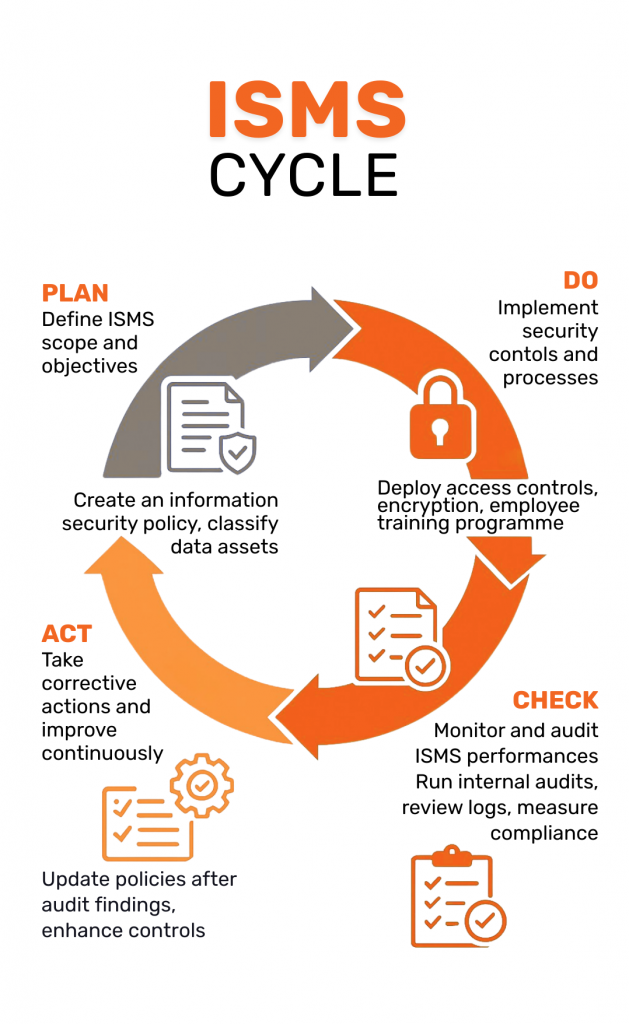
An infographic illustrating the ISO 27001 Information Security Management System (ISMS) using the Plan-Do-Check-Act (PDCA) continuous improvement cycle. The diagram shows four phases: PLAN (Define scope, create policy, classify data assets), DO (Implement security controls, training), CHECK (Monitor, run internal audits, measure compliance), and ACT (Take corrective actions, update policies).

Understanding ISO/IEC 27001 Certification:

A Strategic Framework

ISO/IEC 27001 is the international standard for Information Security Management Systems (ISMS). It outlines the necessary requirements to establish, implement, operate, monitor, review, maintain, and improve an ISMS. Achieving certification demonstrates a company’s commitment to information security, risk management, and regulatory compliance. The standard is applicable to both organisations and individuals, though the paths for each vary.

For organisations, ISO/IEC 27001 is a clear indication that their ISMS aligns with industry best practices. The certification process is structured into several stages:

  • Documentation: This involves drafting and implementing policies, procedures, and controls to manage sensitive information.

  • Internal Audits and Reviews: Conducting regular assessments to ensure that the ISMS is functioning as intended.

  • Certification Audits: A third-party certification body will evaluate the organisation’s ISMS through three key audit phases: Document Review, Main Audit, and Surveillance Audits.

For individuals, certifications like Lead Implementer, Lead Auditor, or Internal Auditor serve as a recognition of their knowledge and capability in implementing or auditing ISO 27001 standards.

The importance of certification is clear—it validates the security posture of an organisation, reassures customers and stakeholders, and mitigates risks associated with data breaches. But achieving and maintaining certification is a journey that involves careful planning, resources, and expertise.

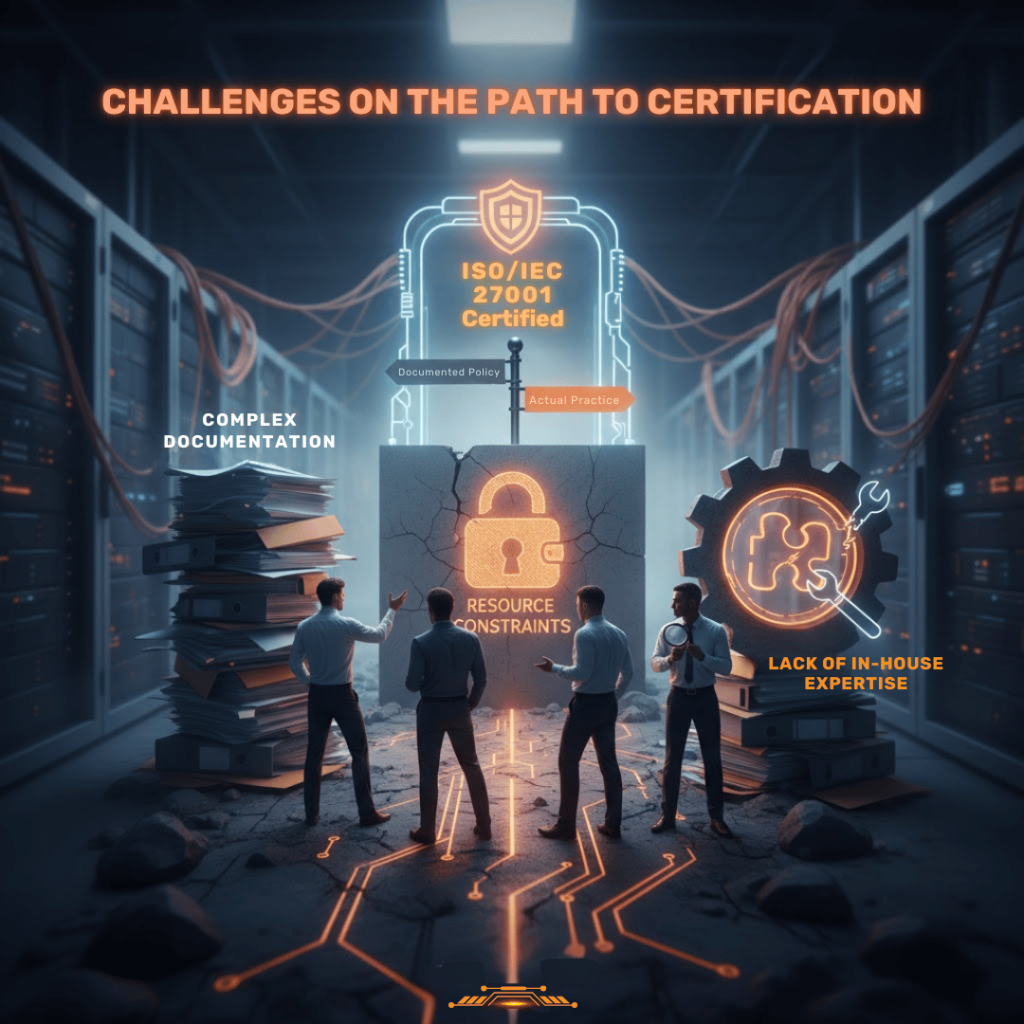
An illustration showing four business figures facing major roadblocks in a data center aisle under a glowing ISO/IEC 27001 certified shield. The obstacles include a high stack labeled 'COMPLEX DOCUMENTATION', a central broken wall with a padlock labeled 'RESOURCE CONSTRAINTS', and a giant unengaged gear labeled 'LACK OF IN-HOUSE EXPERTISE'. An arrow above the wall shows the gap between 'Documented Policy' and 'Actual Practice'.

Challenges on the Path to Certification

While the advantages of ISO/IEC 27001 certification are well known, the road to success is not without its hurdles. Here are some of the most common challenges organisations face:

  • Complex Documentation: The standard requires extensive documentation, which can be overwhelming for organisations, especially those with limited resources.

  • Resource Constraints: Many small and medium-sized enterprises (SMEs) struggle to allocate enough resources to complete the certification process efficiently.

  • Lack of In-House Expertise: Companies may lack internal expertise to handle risk assessments, audits, and the detailed implementation of security controls.

  • Alignment of Security Practices: A significant issue is ensuring that the documented policies and procedures align with the actual practices and day-to-day operations. This discrepancy is often exposed during audits.

Overcoming these challenges requires a comprehensive approach to information security that integrates both technical know-how and strategic oversight.

An isometric infographic showing a complex, glowing digital maze labeled 'Why Expert Guidance is Essential.' A consultant figure, positioned with a blueprint, is guiding a team through the labyrinth toward the final goal: a glowing shield labeled 'ISO 27001 Certified.' Key benefits of the guidance are highlighted with connecting lines: IN-DEPTH EXPERTISE, TAILORED RISK ASSESSMENT, ISMS CONSULTING PROCESS, STREAMLINED PROCESS, and CONTINUOUS IMPROVEMENT.

Why Expert Guidance Is Essential

ISO/IEC 27001 is a comprehensive framework, and getting it right requires more than simply ticking boxes. This is where experienced consultants come into play. Consultants who specialise in ISO/IEC 27001 can help organisations streamline the certification process, reduce risks, and ensure that the ISMS is both compliant and practical.

  • In-depth Expertise: Consultants bring knowledge of best practices and industry standards. Their expertise can provide a clear roadmap for organisations to follow, avoiding common pitfalls.

  • Tailored Risk Assessments: A one-size-fits-all approach rarely works for ISO/IEC 27001. Organisations must tailor their risk assessments to their unique circumstances, taking into account the specific threats and vulnerabilities they face.

  • Practical Guidance for Continuous Improvement: Achieving certification is just the beginning. Maintaining and improving an ISMS is an ongoing process that requires a deep understanding of the framework, as well as real-time adjustments.

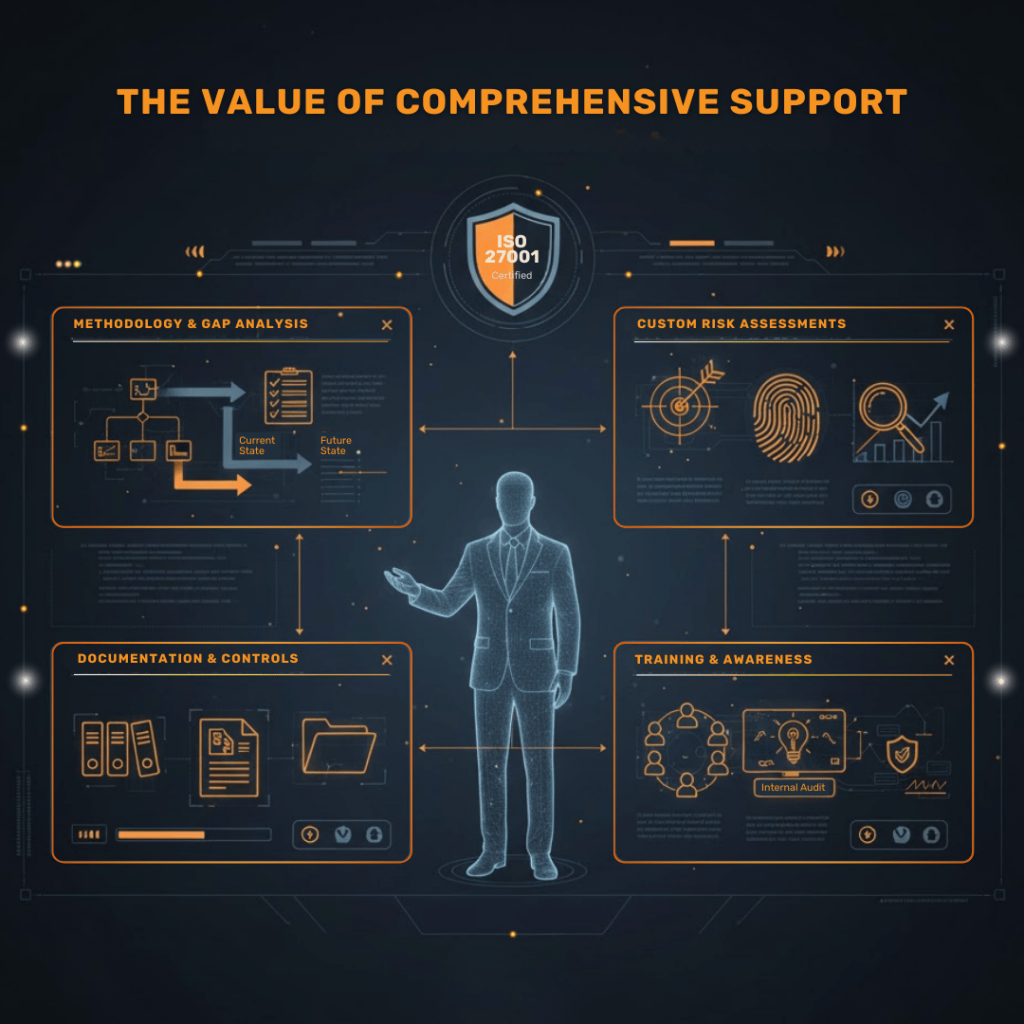
An infographic illustrating the four key values of comprehensive ISO/IEC 27001 support, framed around a central consultant figure. The four areas are: METHODOLOGY & GAP ANALYSIS (showing the transition from 'Current State' to 'Future State'), CUSTOM RISK ASSESSMENTS (with a magnifying glass over a fingerprint and target), DOCUMENTATION & CONTROLS (showing folders and documents), and TRAINING & AWARENESS (highlighting the role of 'Internal Audit' and staff knowledge). The ultimate goal, ISO 27001 Certified, is displayed at the top.

The Value of Comprehensive Support

Working with consultants who are well-versed in ISO/IEC 27001 brings additional value to the table. These consultants not only help navigate the intricacies of the certification process but also provide strategic insights into risk management, information security, and continuous improvement.

  1. Methodology and Gap Analysis: Consultants often begin with a thorough gap analysis to assess the current state of an organisation’s ISMS. By identifying areas for improvement, they can help create a roadmap that meets the certification criteria efficiently.

  2. Custom Risk Assessments: Security is not a one-size-fits-all matter. Consultants can help tailor risk assessments that focus on the organisation’s unique risk profile, ensuring that the security controls implemented address the most critical threats.

  3. Documentation and Controls: The documentation process is a critical part of ISO/IEC 27001 certification. Consultants can provide templates and structured guidance to ensure that the organisation meets the necessary documentation requirements without getting overwhelmed.

  4. Training and Awareness: Providing hands-on training for staff, such as through internal audits or awareness workshops, ensures that employees understand their roles within the ISMS framework and contribute effectively to its success.

A dynamic illustration showing a path to successful certification. A professional consultant guides a small team across a giant, illuminated stamp labeled 'AUDITED & CERTIFIED.' The image symbolizes the case study's successful conclusion, where expert guidance helps an organization smoothly pass its ISO/IEC 27001 audits and achieve certification.

The Path to Successful Certification:
A Case Study

Imagine a financial services company that is preparing for ISO/IEC 27001 certification. They face multiple challenges:

  • The organisation is unclear on how to define the ISMS scope.

  • Risk assessments are incomplete and lack actionable insights.

  • Policies are well-documented but not yet integrated into the daily operations of the company.

By working with expert consultants, the company is able to:

  • Refine the scope: The consultants help narrow down the ISMS scope to focus on the most critical assets and operations.

  • Conduct thorough risk assessments: A comprehensive risk register is created, which identifies and addresses industry-specific threats and vulnerabilities.

  • Integrate policies into practices: Staff training and internal audits ensure that security policies are not just written down but are actively followed.

The result? The company successfully passes both the Stage 1 and Stage 2 audits, ensuring a smooth certification process and a solid foundation for future security management.

An infographic illustrating the four key values of comprehensive ISO/IEC 27001 support, framed around a central consultant figure. The four areas are: METHODOLOGY & GAP ANALYSIS (showing the transition from 'Current State' to 'Future State'), CUSTOM RISK ASSESSMENTS (with a magnifying glass over a fingerprint and target), DOCUMENTATION & CONTROLS (showing folders and documents), and TRAINING & AWARENESS (highlighting the role of 'Internal Audit' and staff knowledge). The ultimate goal, ISO 27001 Certified, is displayed at the top.

The Value of Comprehensive Support

Working with consultants who are well-versed in ISO/IEC 27001 brings additional value to the table. These consultants not only help navigate the intricacies of the certification process but also provide strategic insights into risk management, information security, and continuous improvement.

  1. Methodology and Gap Analysis: Consultants often begin with a thorough gap analysis to assess the current state of an organisation’s ISMS. By identifying areas for improvement, they can help create a roadmap that meets the certification criteria efficiently.

  2. Custom Risk Assessments: Security is not a one-size-fits-all matter. Consultants can help tailor risk assessments that focus on the organisation’s unique risk profile, ensuring that the security controls implemented address the most critical threats.

  3. Documentation and Controls: The documentation process is a critical part of ISO/IEC 27001 certification. Consultants can provide templates and structured guidance to ensure that the organisation meets the necessary documentation requirements without getting overwhelmed.

  4. Training and Awareness: Providing hands-on training for staff, such as through internal audits or awareness workshops, ensures that employees understand their roles within the ISMS framework and contribute effectively to its success.

A dynamic illustration showing a path to successful certification. A professional consultant guides a small team across a giant, illuminated stamp labeled 'AUDITED & CERTIFIED.' The image symbolizes the case study's successful conclusion, where expert guidance helps an organization smoothly pass its ISO/IEC 27001 audits and achieve certification.

The Path to Successful Certification:
A Case Study

Imagine a financial services company that is preparing for ISO/IEC 27001 certification. They face multiple challenges:

  • The organisation is unclear on how to define the ISMS scope.

  • Risk assessments are incomplete and lack actionable insights.

  • Policies are well-documented but not yet integrated into the daily operations of the company.

By working with expert consultants, the company is able to:

  • Refine the scope: The consultants help narrow down the ISMS scope to focus on the most critical assets and operations.

  • Conduct thorough risk assessments: A comprehensive risk register is created, which identifies and addresses industry-specific threats and vulnerabilities.

  • Integrate policies into practices: Staff training and internal audits ensure that security policies are not just written down but are actively followed.

The result? The company successfully passes both the Stage 1 and Stage 2 audits, ensuring a smooth certification process and a solid foundation for future security management.

Conclusion: Achieving and Sustaining ISO/IEC 27001 Certification

ISO/IEC 27001 certification is a strategic investment in trust, security, and resilience. But reaching the finish line—and sustaining it—requires more than templates and audits. It demands expert guidance, tailored solutions, and a partnership that prioritises real-world effectiveness over textbook theory. The journey towards ISO/IEC 27001 certification represents a significant commitment to information security, risk management, and business resilience. However, achieving certification and ensuring long-term compliance is no simple task. It demands strategic planning, specialised expertise, and a focus on continual improvement.

A dramatic, futuristic illustration showing a team of professionals standing before a large, glowing, orange-hued ISO/IEC 27001 Certified shield. A pathway leads from the team up to the shield, overlooking a dark cityscape. Floating icons around the team highlight the consulting process: Expert Guidance, Tailored Solutions, Strategic Planning, and Hands-on Training. The text below features the consultant's name, 'Sapience Consulting,' emphasizing the investment in trust and resilience

By partnering with the right consultants, organisations can navigate the complexities of the certification process, tailor their ISMS to their unique needs, and build an information security framework that not only meets compliance requirements but also delivers real business value. Sapience Consulting offers exactly that. With a strong track record in ISMS development, risk-based security frameworks, and hands-on training, they help clients achieve certification efficiently and meaningfully. Whether you’re just starting or aiming to upgrade your current ISMS, Sapience will meet you where you are—and take you where you need to go.

ISO/IEC 27001 is more than just a certification—it’s an investment in trust, resilience, and competitive advantage. As organisations continue to face evolving cyber threats, having a robust ISMS that aligns with global best practices will be more crucial than ever.

Why Sapience Consulting Is the Right Partner ?

An abstract visual representation of deep expertise, featuring glowing, complex digital circuitry or a neural network inside a geometric shape. The image uses corporate colors (orange and gray/white) and symbolizes integrated, tailored solutions for the ISO/IEC 27001 standard, emphasizing the interconnection of risk management, the Statement of Applicability (SoA), and continuous improvement.

Sapience Consulting specialises in ISO/IEC 27001 and other cybersecurity-related standards. With a clear focus on risk management, Statement of Applicability (SoA), and continual improvement—pillars of ISO 27001—we bring clarity to what can otherwise be an overwhelming process. Our methodology ensures:

  • Comprehensive gap analysis.
  • Custom risk assessments tailored to your industry and risk appetite.
  • SoA creation that links your controls to specific risks and operational needs.

“The SoA, risk management, and continual improvement process are not standalone elements. Sapience integrates these pillars to ensure organisations move beyond check-box compliance to real, operationally integrated security.”
Sapience Blog, May 2025

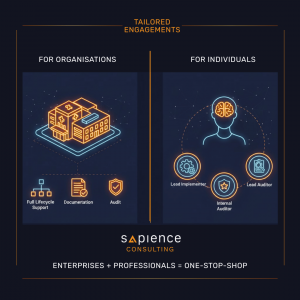
An infographic titled 'Tailored Engagements' split into two sections. The left side, 'For Organisations,' features an isometric icon of a building (healthcare/startup) with icons for 'Full Lifecycle Support,' 'Documentation,' and 'Audit.' The right side, 'For Individuals,' shows a silhouette of a person with a glowing brain, surrounded by credentials for 'Lead Implementer,' 'Internal Auditor,' and 'Lead Auditor.' At the bottom, the Sapience Consulting logo appears above the text: 'ENTERPRISES + PROFESSIONALS = ONE-STOP-SHOP.'

Whether you’re a healthcare provider looking to secure patient data, a tech startup with compliance demands, or an IT professional seeking personal ISO 27001 credentials, Sapience offers tailored services:
• For organisations:  Full lifecycle support from documentation to audit readiness.
• For individuals Accredited training for roles like Lead Implementer, Internal Auditor, and Lead Auditor. 

This dual focus makes them a one-stop-shop for both enterprises and professionals.
An infographic illustrating practical security training. A central figure is shown working on a laptop, surrounded by icons representing real-world scenarios and practical tools. Key elements include a clipboard for evidence gathering, documentation templates for simplifying compliance, and a target icon, emphasizing the goal of moving beyond theory to achieve auditor expectations and successful Stage 2 certification.

Training with Sapience goes beyond theory. Our courses emphasise real-world scenarios, auditor expectations, and implementation tips. For instance, understanding what an auditor will look for during Stage 2—such as evidence that policies are not only documented but followed—can be the difference between success and failure.

We also provide toolkits and templates that simplify documentation, control implementation, and evidence
gathering—key areas where many organisations falter.


As organisations seek certification that’s recognised worldwide, Sapience ensures that your ISMS aligns with global best practices while addressing local regulatory and industry-specific requirements. Our consultants and trainers possess industry-specific expertise—whether it’s financial services, healthcare, or manufacturing—ensuring relevant, actionable advice.
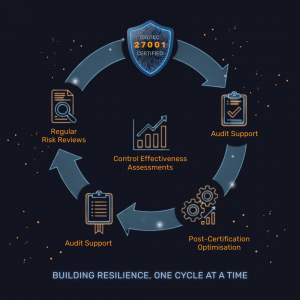
An infographic titled 'Building Resilience, One Cycle at a Time.' It features a glowing, circular arrow representing the continuous improvement loop (PDCA). Inside the loop are icons for 'Risk Reviews,' 'Effectiveness Assessments,' and 'Post-Audit Support.' The Sapience Consulting logo is at the bottom, reinforcing the message that ISO 27001 is an ongoing commitment to security and business resilience.

ISO 27001 is not a one-time project; it requires ongoing commitment. Sapience helps organisations establish a continuous improvement framework through regular risk reviews, control effectiveness assessments, and audit support, even after certification.


Success in Action: How Sapience Delivers Value

Let’s consider a mid-sized fintech company preparing for ISO 27001 certification. They’re struggling to:

⚠️ Define the ISMS scope.

⚠️ Perform an accurate risk assessment.

⚠️ Translate policies into daily practices.

By partnering with Sapience:
✅ They receive guidance to narrow their ISMS scope for faster, focused implementation.
✅ A risk register is built with industry-specific threats and controls.
✅ Staff receive hands-on awareness training and internal audit coaching.
✅ They pass both Stage 1 and Stage 2 audits on the first try—saving time and money.

This scenario reflects Sapience’s commitment to pragmatic compliance—where certification isn’t just achieved but maintained and improved over time. Talk to us today and get your ISO27001 journey started on the right footing!

As a trusted leader in professional development, Sapience empowers you to invest in your future.

Don’t wait – Explore our available funding and leverage our expertise to upskill without financial strain.

There is no better time than NOW! Explore our in-demand courses

Cybersecurity & Risk, AI & Big Data

Governance & Service Management

Share This Piece:

Share on facebook
Share on twitter
Share on linkedin
Share on whatsapp
Share on email