Why a Risk-Based Approach
Remains Essential in the
Age of AI
Written by:

Consultant
Sapience Consulting

“Innovation is accelerating at unprecedented speed, yet the fundamental questions remain unchanged:
What could go wrong?”

Your organisation has just deployed a generative AI assistant to improve productivity. Within weeks, teams are using it to draft reports, summarise contracts and analyse customer data. Efficiency gains are visible. Morale is high. Then a senior manager discovers that sensitive information was uploaded into a public AI platform. Shortly after, a model-generated recommendation produces a biased outcome that raises regulatory concerns.
This is the paradox of the AI era. Innovation is accelerating at unprecedented speed, yet the fundamental questions remain unchanged. What could go wrong? How severe would the impact be? Are we prepared to manage it?
The objective of this article is to demonstrate why a risk-based approach remains not only relevant but critical in today’s AI-driven environment. We will explore how established governance and risk management principles, including guidance from organisations such as ISO and NIST, continue to provide a stable foundation for responsible AI adoption, and show how structured risk thinking enables organisations to innovate confidently rather than cautiously retreat.
The Illusion of Novelty: AI Changes Tools, Not Risk Fundamentals
Artificial intelligence may feel revolutionary, but risk itself is not new. Data leakage, operational disruption, regulatory breaches and reputational damage have long existed. AI simply introduces new vectors and amplifies scale.

A logistics firm was eager to integrate AI-driven demand forecasting. The executive team initially framed the challenge as a technology decision. However, when guided through a structured risk assessment exercise, the conversation shifted. What data would train the model? How would accuracy be validated? Who would be accountable for decisions influenced by AI outputs?
By applying a risk-based lens, the organisation identified high-impact scenarios before deployment. Controls were prioritised based on likelihood and impact,not fear or hype. This prevented overinvestment in low-probability risks while ensuring material exposures were addressed.
Frameworks aligned with ISO risk management principles emphasise proportionality. Not every AI use case requires the same level of oversight. A chatbot for internal FAQs carries different risk from an AI engine approving financial transactions. The discipline lies in differentiating between them.
Risk-Based Governance Enables Responsible Innovation
In the rush to adopt AI, some organisations default to extremes. Either they impose blanket restrictions that stifle innovation, or they allow uncontrolled experimentation that creates exposure.
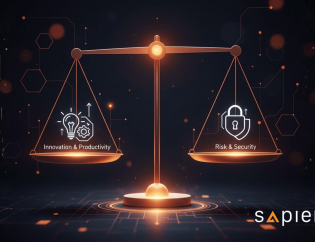
A risk-based approach offers a middle path. Rather than asking whether AI should be used, leaders ask where it can be used safely and under what conditions.

Consider guidance such as the AI Risk Management Framework developed by National Institute of Standards and Technology. It emphasises identifying, assessing and managing risks across the AI lifecycle. This lifecycle perspective is critical. Risks emerge not only during deployment but also during data collection, model training, integration and monitoring.
A possible practical approach would be to simulate real-world AI scenarios in workshops. Participants map risks across each stage of the lifecycle. They then design layered controls, including data governance policies, human oversight checkpoints and model validation processes. This exercise demonstrates that governance is not an obstacle. It is an enabler that builds stakeholder trust.
When regulators, customers and partners see structured risk management in place, confidence increases. Innovation becomes sustainable rather than speculative.
Embedding Accountability in Human–AI Collaboration
One of the most significant risks in AI adoption is diffusion of responsibility. When an algorithm produces an output, who owns the decision?

A healthcare technology provider faced this challenge after integrating AI-assisted diagnostics. Initial workflows blurred accountability between clinicians and the AI tool. Through a risk-based review, the organisation redefined decision rights. AI outputs were positioned as decision support, not decision replacement. Human sign-off remained mandatory for high-impact cases.
This clarity reduced legal exposure and strengthened professional trust. It also reinforced an essential principle: risk-based governance must address people, processes and technology together.
Standards associated with ISO emphasise leadership commitment and clearly defined roles. In the AI context, this translates to documented accountability matrices, transparent model documentation and escalation protocols for anomalous outputs.
AI may automate tasks, but responsibility remains human.
Skills Development as a Risk Mitigation Strategy
Technology controls alone are insufficient. A risk-based approach recognises that competence is itself a control.

As a trainer, I do encounter professionals who understand AI functionality but lack structured risk evaluation skills. Conversely, risk managers may understand controls but not the mechanics of AI systems. Bridging this gap is critical.
Targeted training equips professionals to ask the right questions. What data sources are feeding the model? How is bias tested? What metrics determine acceptable error rates? How is model drift detected over time? By cultivating shared language between technical teams and governance professionals, organisations reduce misalignment and blind spots. Risk assessments become informed rather than superficial.
For individual professionals, mastering AI risk governance enhances career relevance. Employers increasingly seek talent capable of balancing innovation with compliance and ethical responsibility. Structured knowledge in risk management frameworks signals readiness to lead in complex digital environments.
In summary, artificial intelligence may redefine how organisations operate, but it does not eliminate the need for disciplined risk management. If anything, the scale, speed and opacity of AI systems heighten the importance of a structured, risk-based approach.
By prioritising risks according to impact and likelihood, aligning governance with recognised standards, and embedding accountability across the AI lifecycle, organisations can innovate with confidence. They avoid the false choice between rapid adoption and cautious paralysis.
Something to Ponder
As AI transitions from a “tool” to a “teammate,” we must ask: Is our greatest vulnerability the technology itself, or the widening gap between the rapid pace of AI adoption and our team’s maturity in evaluating their risks?
Innovation without accountability is just a liability in waiting. Is your team ready to bridge the gap?
Check out our IBF and SSG funded courses! There is no better time to upskill than now!

IBF Funding
IBF Funding